For portfolio owners
You hold the units: the service charges, the developer instalments and the void periods are yours, and you are the person who finds out last when a cheque does not clear. The owner's account is the one that sees all of it on one surface.
Your first day
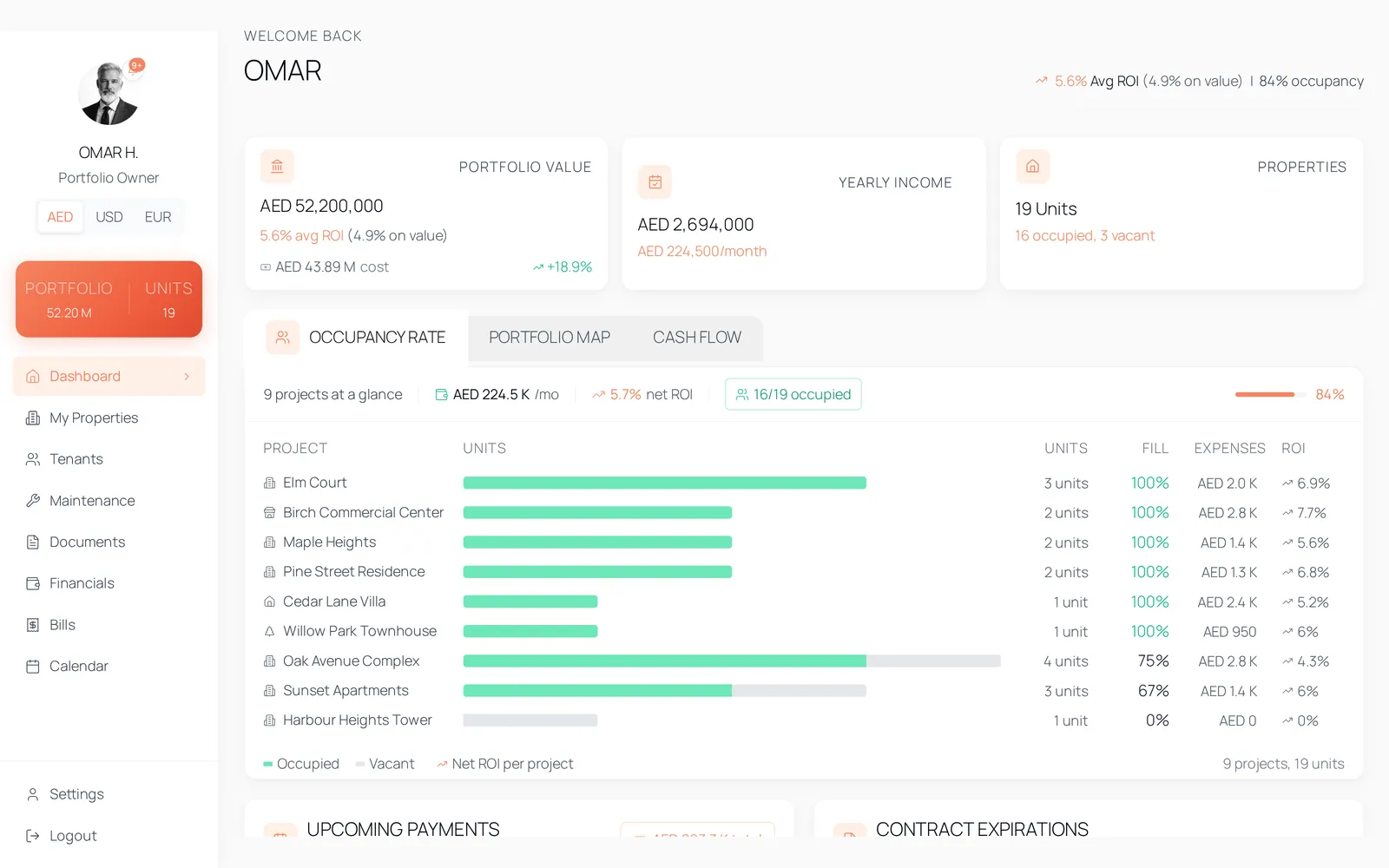
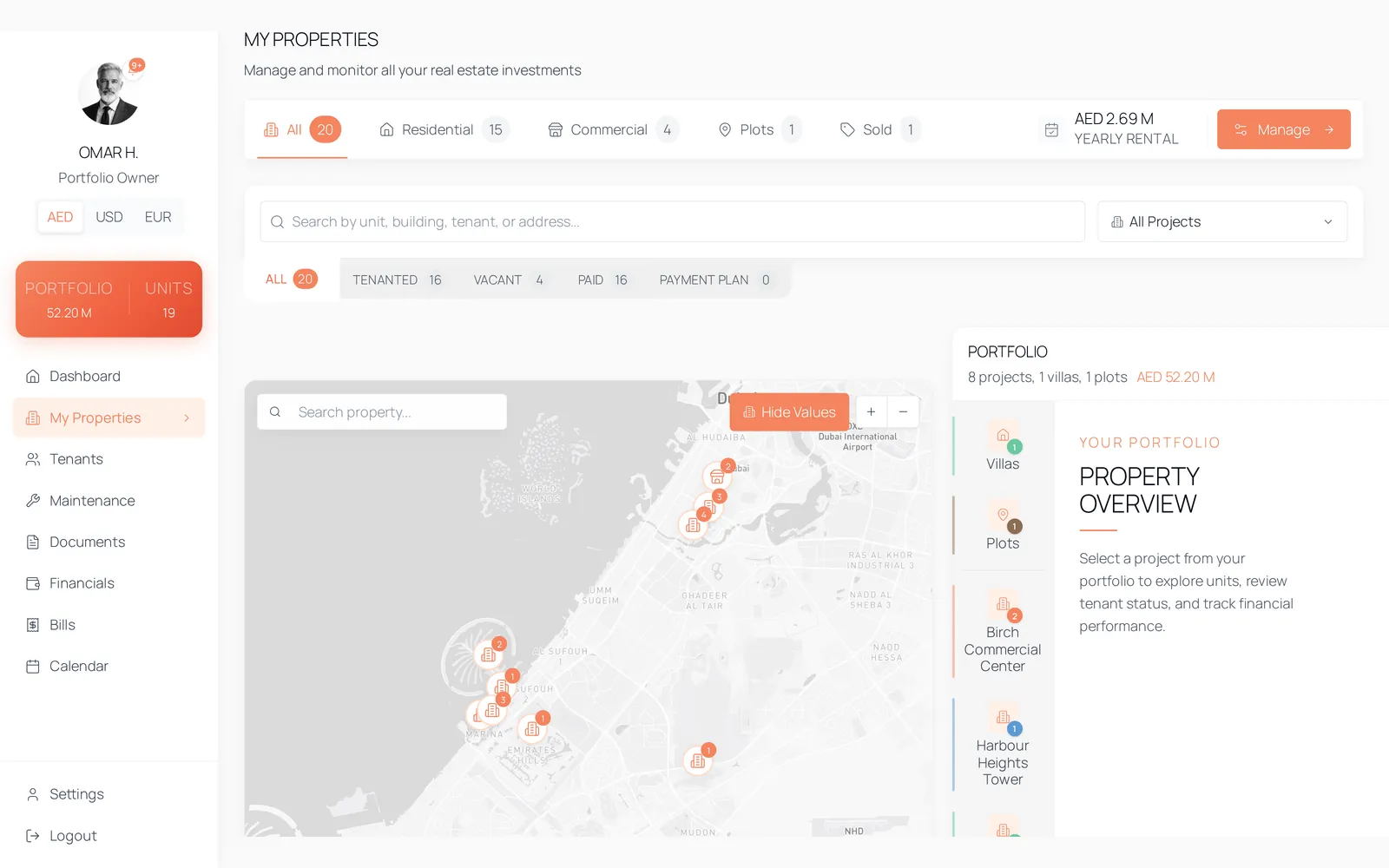
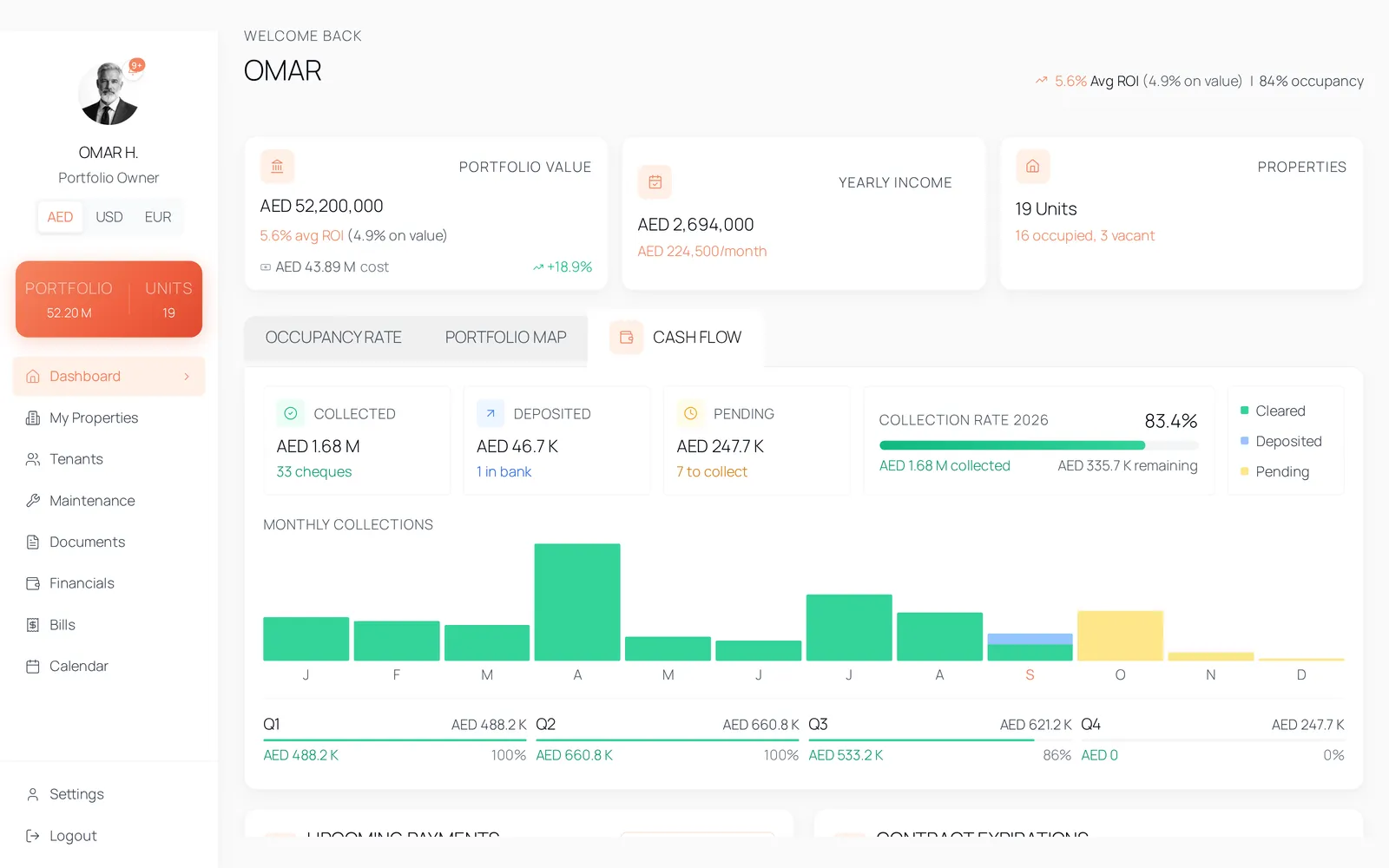
The three screens this account opens on, captured from the product.
What you can and cannot do
You can
- See every project, building and unit on the account, with occupancy and net ROI per building.
- Read the cheque schedule on any contract and move a cheque from pending to deposited to cleared.
- Record utility bills and service charge periods, settle them, and delete one when it was entered in error.
- Record a sale with its fees and read the profit and loss across the whole holding period.
- Invite managers and scope each of them to the buildings they actually run.
- Configure contract addendum clauses, email templates and their trigger events.
- Add co-owners, each with their own access scope over entities or properties.
- Turn on two-factor authentication for the account.
You cannot
- Register an Ejari contract from inside the product — registration stays with the authority; the number and the certificate are stored here.
- Collect rent through the product. There is no payment rail; cheques are banked at your bank and recorded here.
- Issue API keys. Those are held by the platform's super-admin, with scopes, limits and expiry dates.
- See another owner's portfolio. Row-level security in Postgres scopes the account to its own records.
Workflows you will use
Cheque tracking
Four cheques, four states, one schedule
Service charges
What the year should cost, and what it actually did
DEWA and utility recharge
The bills you paid, and who owes them back
Selling a unit
What the unit actually made
Off-plan payment plans
The instalments you owe the developer
Ejari and contracts
The contract, its signatures and its Ejari certificate
Questions
Add them as a co-owner with an access scope over the entities or properties they work on. The scope is part of the account, not a filtered screen.
The same record, seen from elsewhere
One unit, one record, and three accounts looking at it. What each of them can reach is decided in the database rather than by which screen they were sent to.