The instalments you owe the developer
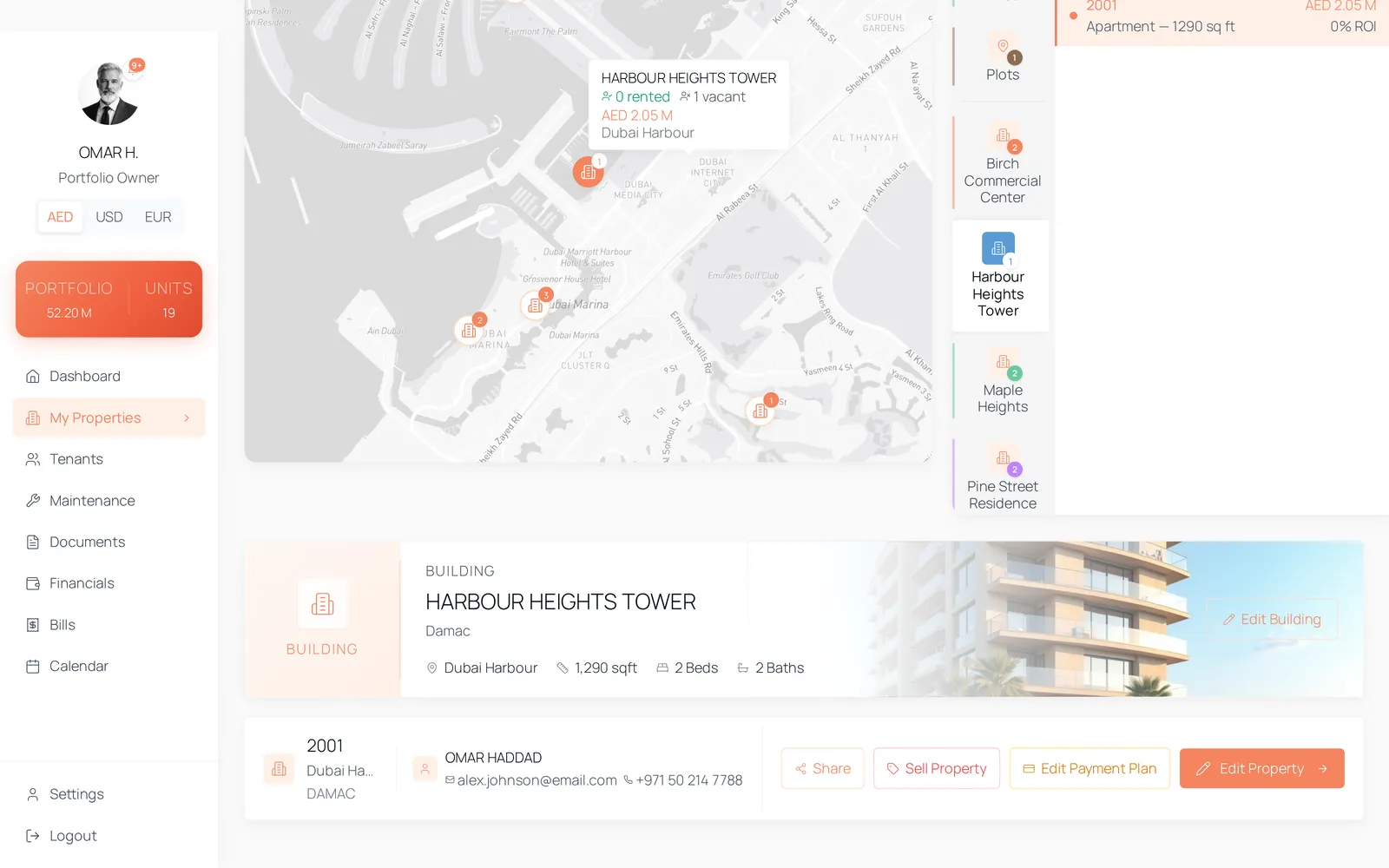
An off-plan unit carries its payment plan as dated instalments by type — booking, DLD, agent commission, construction, handover and post-handover — on the year calendar, with alerts before each one and after any that slips.
How an off-plan schedule goes wrong
- The payment plan is a PDF from the developer and the dates in it have never been put anywhere you look.
- A construction milestone falls due while you are counting on the rent from a different unit.
- Three units are under construction and their schedules have never been seen side by side.
- The handover payment is remembered a week after the developer's reminder.
How it works
The plan is entered as the developer wrote it
Each instalment is a label, a date, an amount and a type. Construction instalments carry their percentage, so a milestone reads as the stage it represents rather than as a date with a number beside it. The plan can be built when the unit is added or edited afterwards.
Instalments sit on the same calendar as the rent
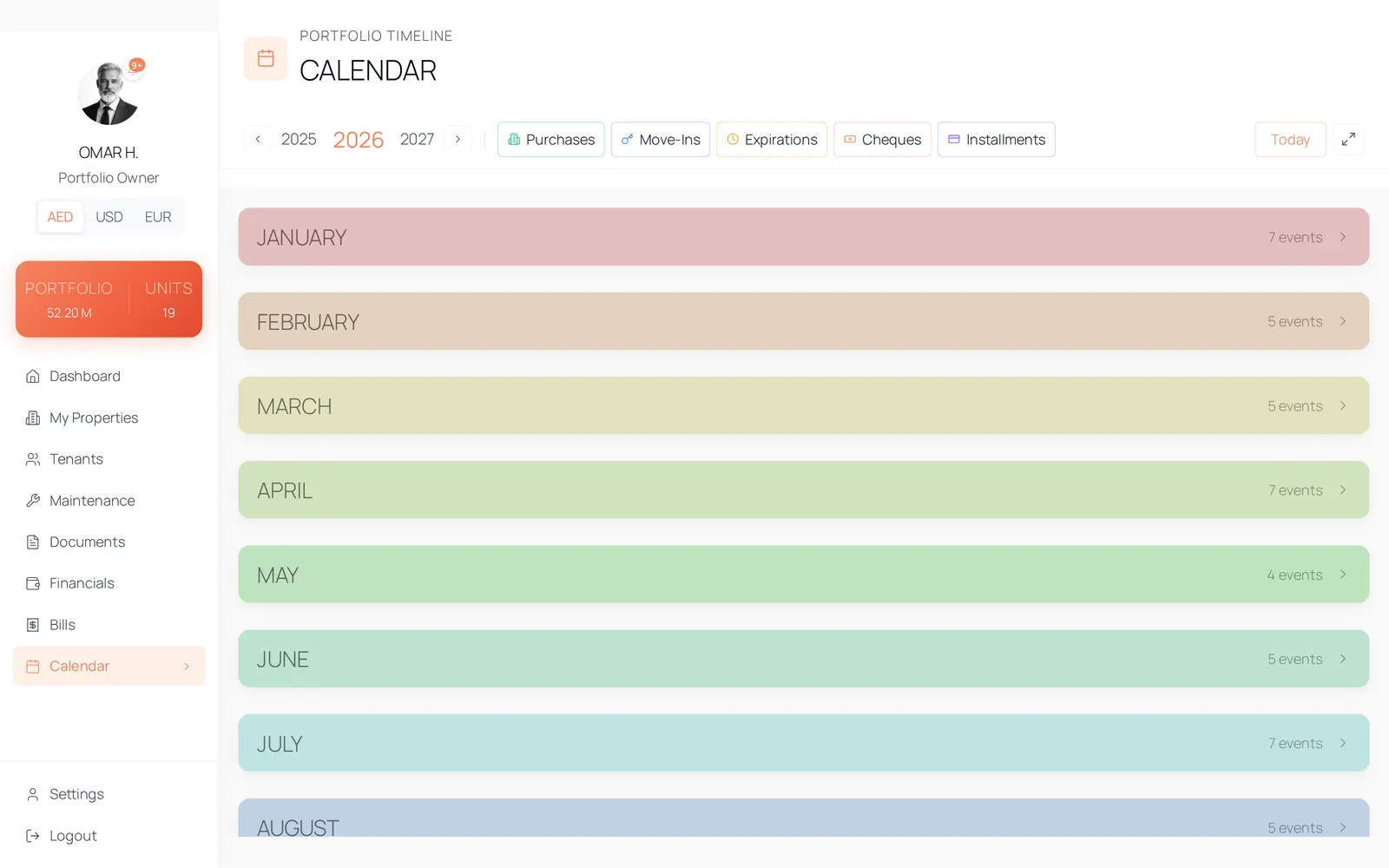
The year calendar carries instalments beside cheques, move-ins, purchases and expirations, each filterable by type and by building. Money going out and money coming in are read on one surface, which is the only way a construction milestone and a cheque falling in the same week become visible before they both do.
Alerts before, and after
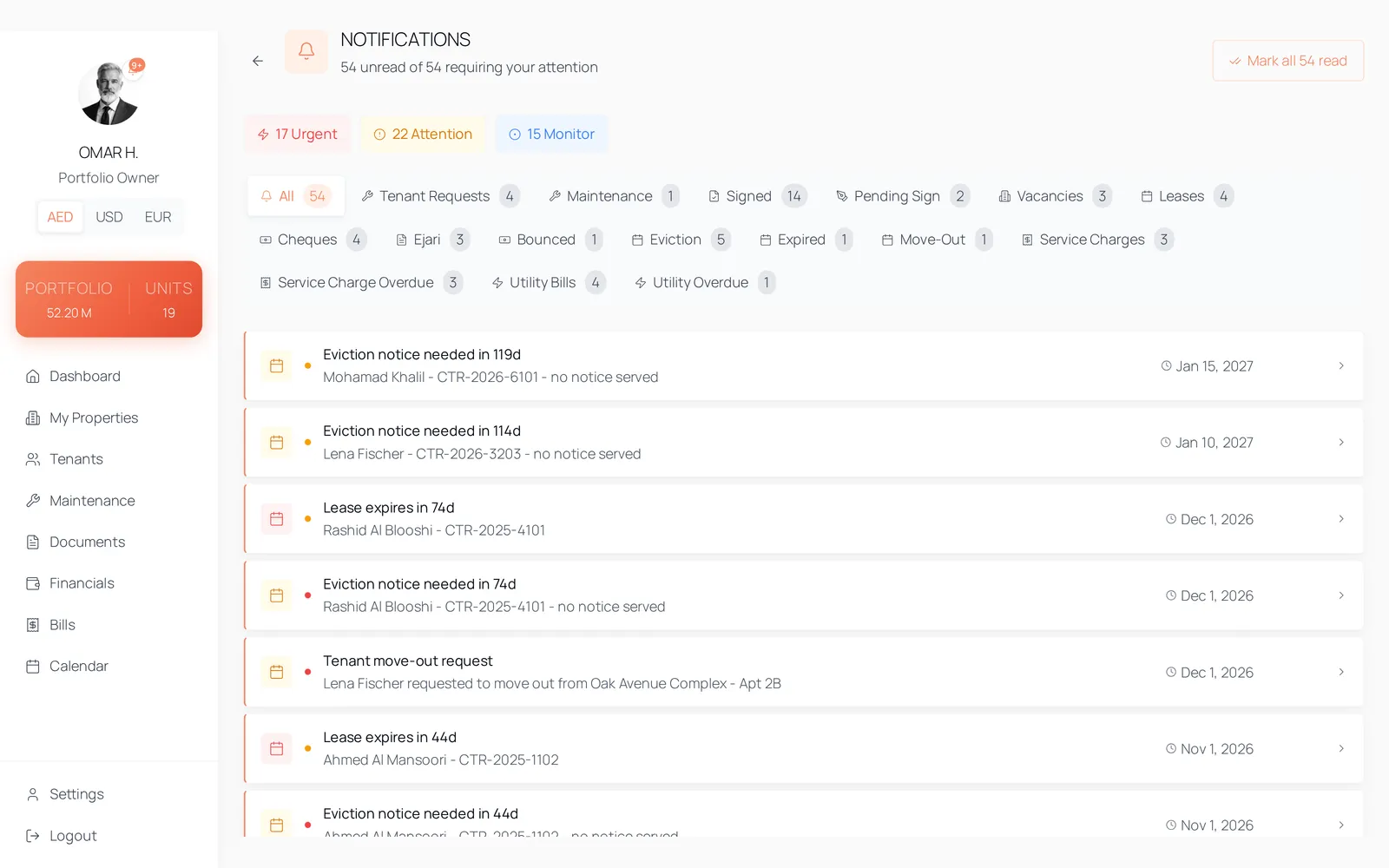
An instalment approaching raises alerts at thirty, fifteen, ten, five, three, two and one day, and on the day itself. One that passes unpaid escalates to an overdue alert with its own identity, so it resurfaces as unread rather than sitting quietly beneath the notification you already dismissed.
The details
- Instalment types
- booking, DLD, agent commission, construction, handover, post-handover — each with its own glyph and colour, sorted in that order.
- Per instalment
- Label, date, amount, type, paid flag, and a construction percentage where the milestone has one.
- Status
- Derived: paid, overdue, or upcoming.
- Alert ladder
- 30, 15, 10, 5, 3, 2 and 1 days, and on the day. Overdue instalments are raised for ninety days.
- Escalation
- A due alert and an overdue alert carry different identities, so the overdue one arrives unread instead of inheriting a dismissal.
- Email triggers
- installment_due, installment_overdue and payment_plan_updated are available to the email templates.
- On the calendar
- Instalments are their own filterable event type, shown beside cheques, purchases, move-ins and expirations.
Questions
No. There is no payment rail in the product. What lives here is the schedule, the status of each instalment and the alerts around its date.
See it with data in it
The demo opens instantly, in the role this workflow belongs to, on sample data. There is no account to create and no form in front of it.