Four cheques, four states, one schedule
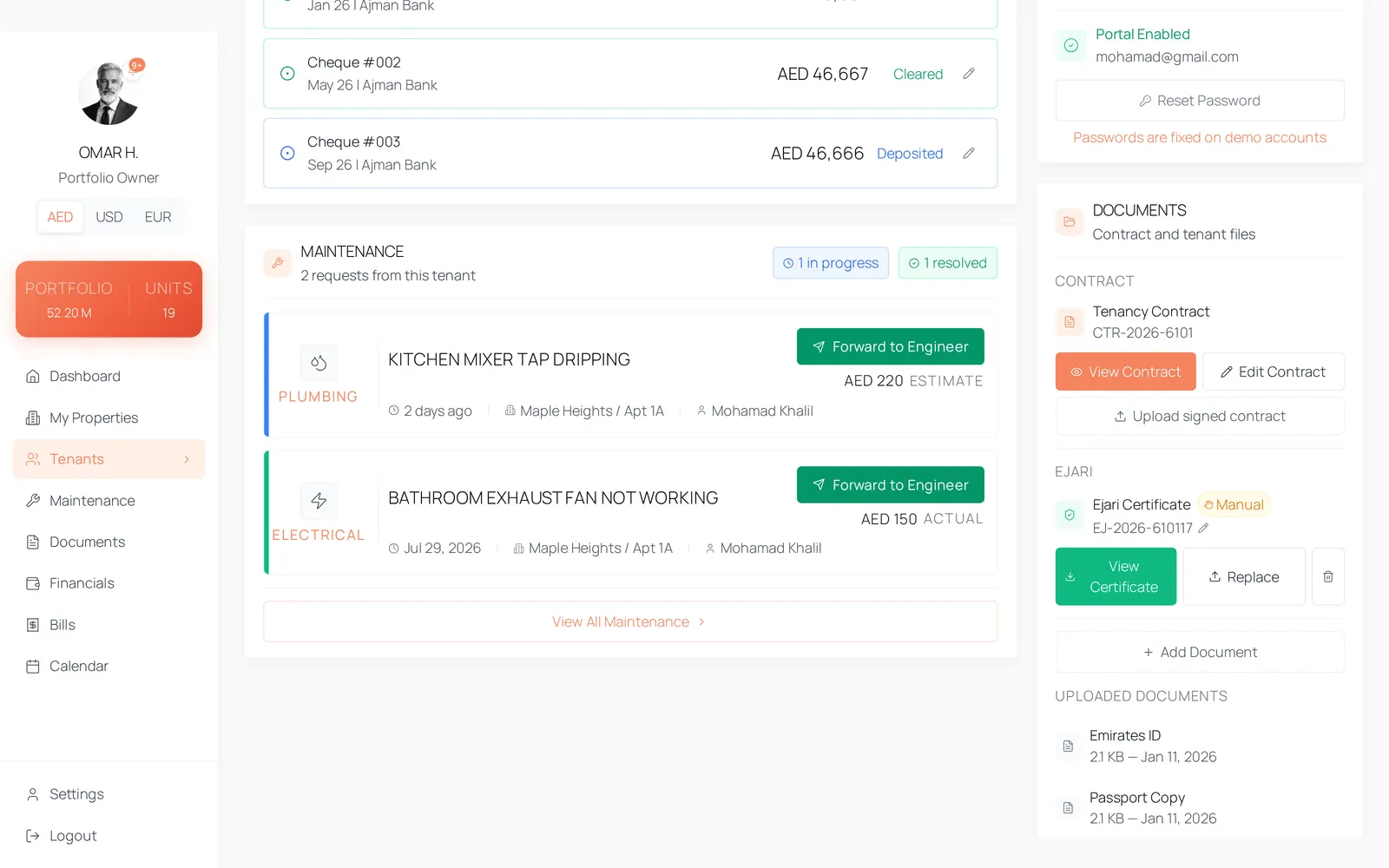
Dubai rent arrives as post-dated cheques. Each one is a row on the contract with a due date, a bank and a status — pending, deposited, cleared or bounced — so the question of what has actually been banked has an answer you can open rather than remember.
Where a cheque schedule usually lives
- The cheques are in a drawer and the dates are in a spreadsheet, and the spreadsheet was last opened two tenants ago.
- You deposit a cheque, it clears, and nothing anywhere records that it did — so next quarter you check the bank statement to find out.
- A tenant asks which cheques are still outstanding and you count the paper in the drawer to answer.
- One bounces, and the first you hear of it is the bank, not the file.
How it works
The schedule is built with the contract
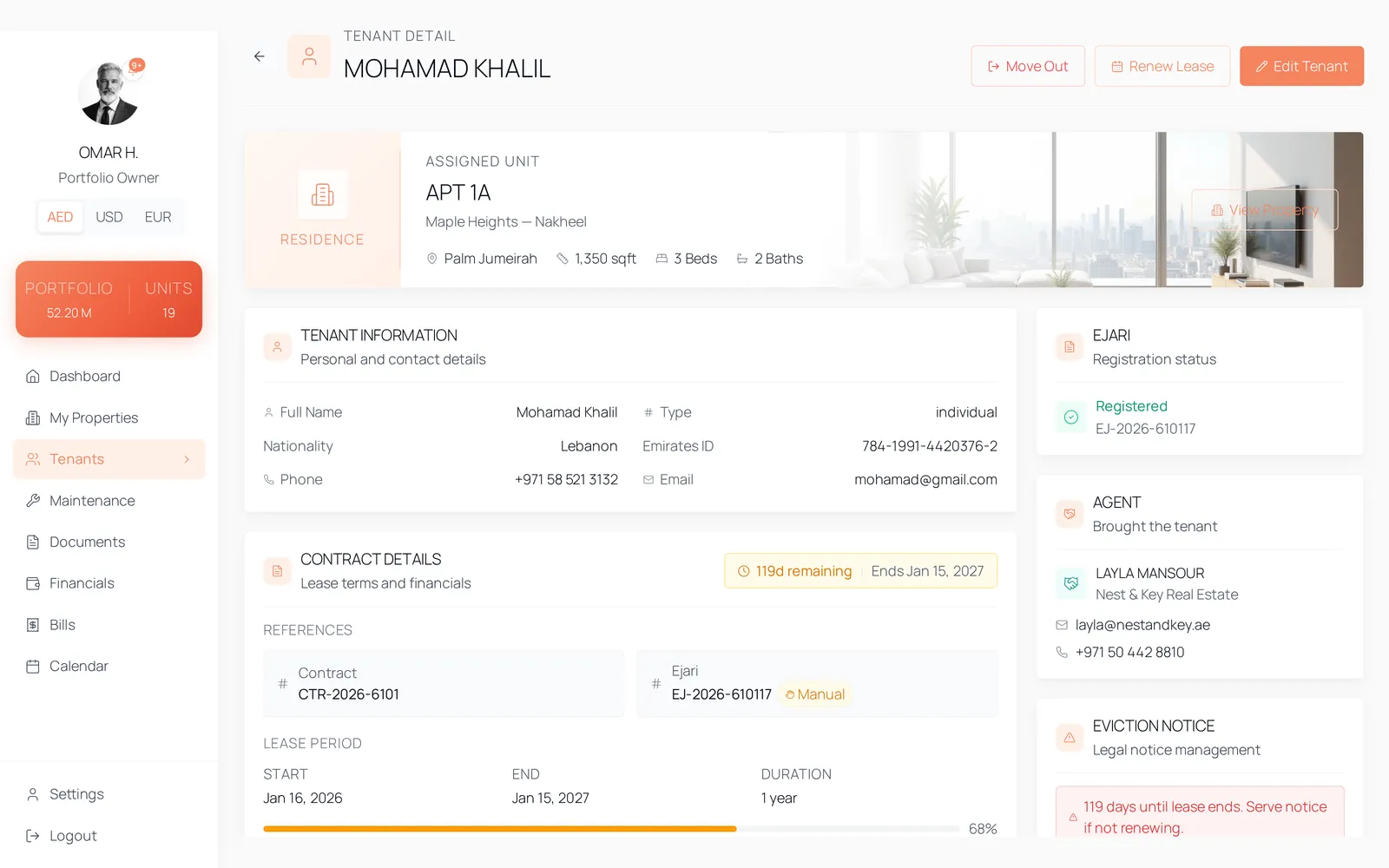
Onboarding ends by splitting the annual rent across the frequency you chose — annual, semi-annual, tri-annual, quarterly, bi-monthly or monthly. Each instalment becomes a cheque row carrying its number, bank, amount, due date and the period it covers. Cash, bank transfer and crypto are recorded the same way, so a contract paid by transfer still has a schedule rather than a note.
A cheque moves forward, never sideways
Pending becomes deposited, deposited becomes cleared, and each step stamps its own timestamp. The buttons enforce the order: a cheque cannot be cleared before it has been deposited. When a cheque is settled some other way, the clearing method records which — cleared normally, or returned and paid in cash, by transfer or in crypto.
Due dates sit on the year calendar
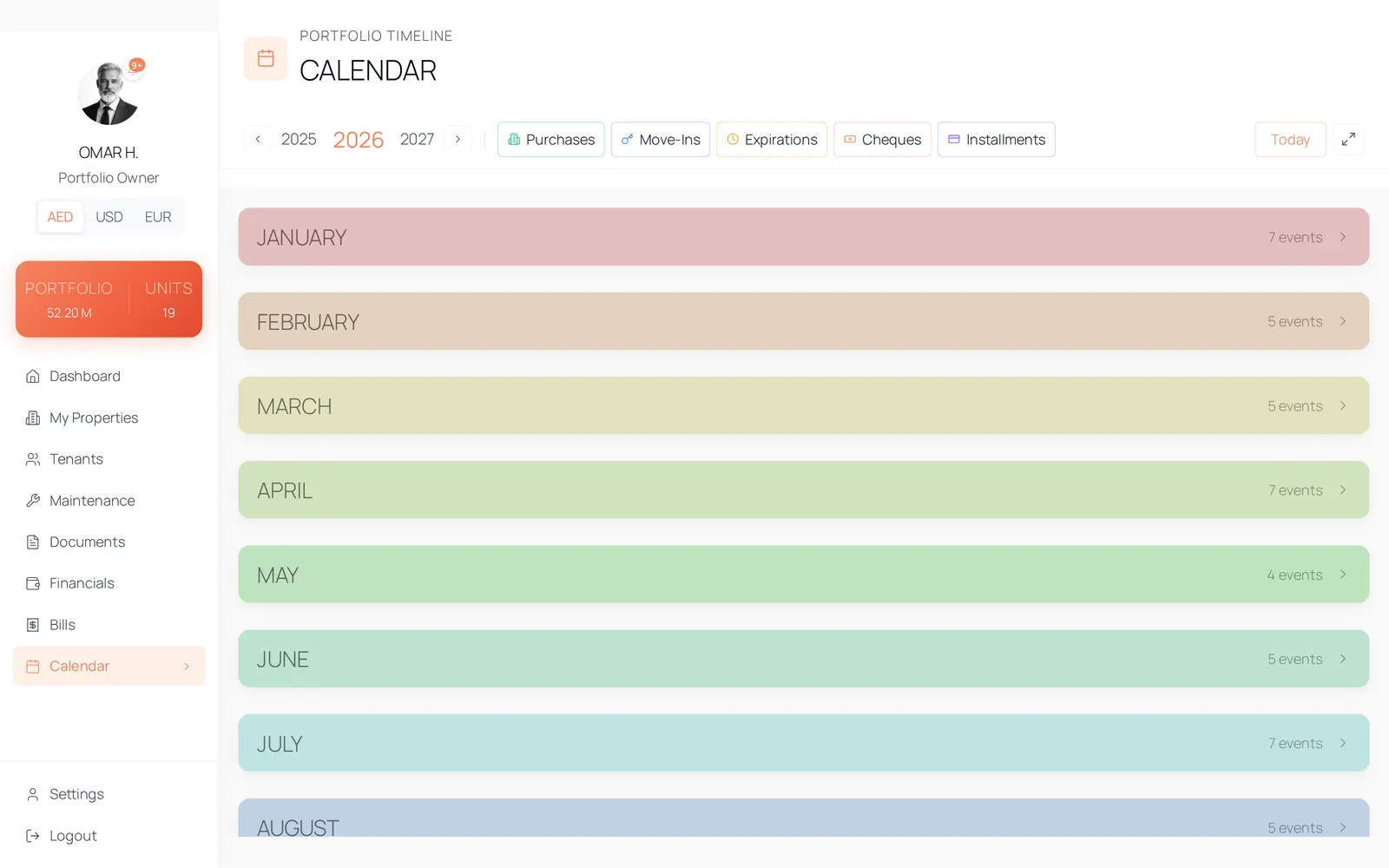
Every cheque due date is an event on the calendar beside move-ins, expirations and payment-plan instalments, and the calendar filters by event type and by building. A quarter's collections can be read as a month block rather than assembled from four records.
The alerts arrive before you would have looked
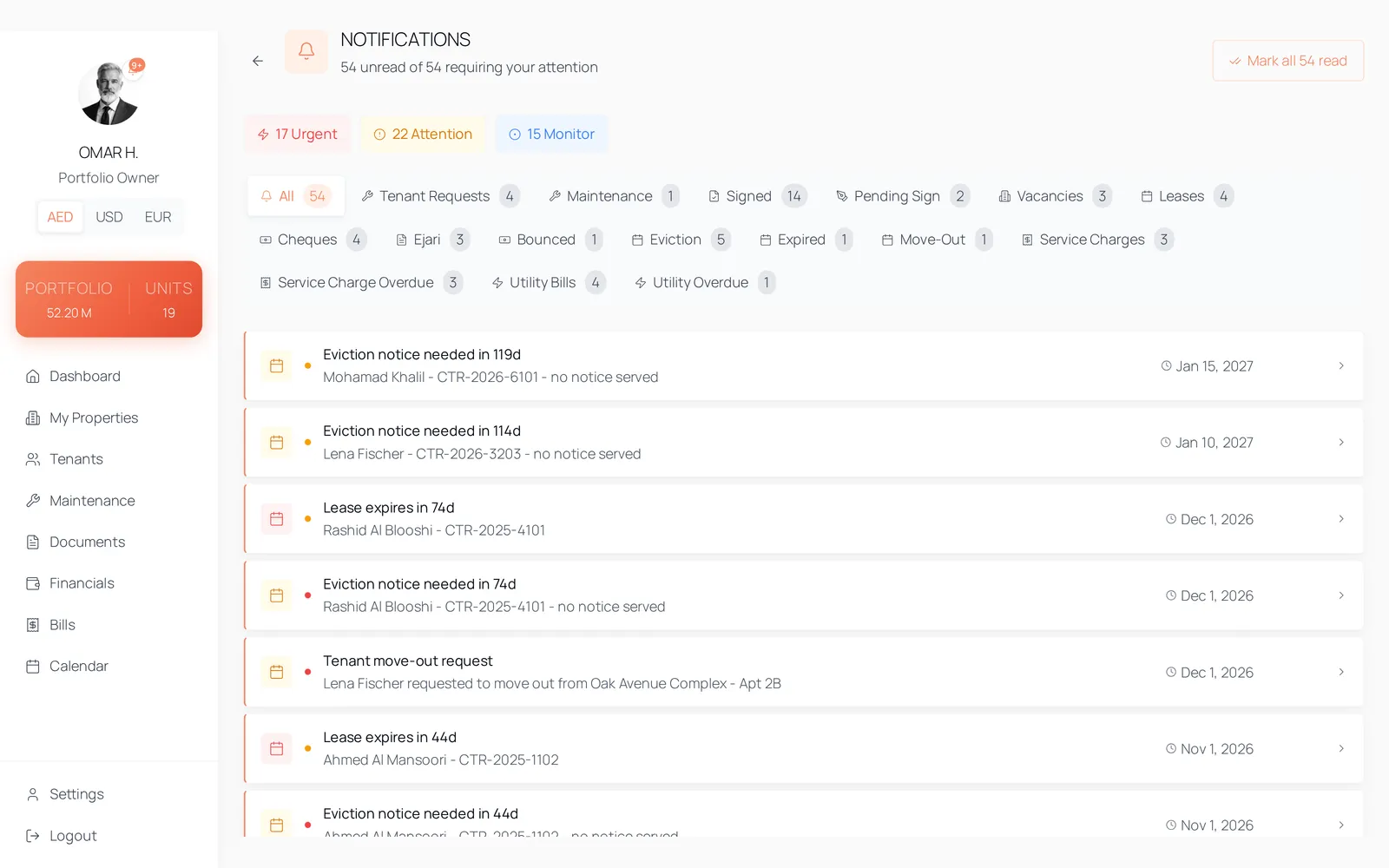
A cheque due inside thirty days raises a notification, and it stays on the list until the cheque moves. A cheque still unbanked after its due date is raised again as overdue for thirty days. A cheque marked bounced raises a high-priority alert of its own, and a cheque_bounced email trigger is available for the templates.
The details
- Statuses
- pending, deposited, cleared, bounced. Deposited stamps deposited_at, cleared stamps cleared_at.
- Payment methods
- cheque, cash, transfer, crypto — recorded per cheque, not per contract.
- Clearing method
- Cheque cleared, or returned and settled in cash, by transfer, or in crypto.
- Frequencies
- Annual, semi-annual, tri-annual, quarterly, bi-monthly, monthly. A contract already written to a different split keeps it.
- Editing amounts
- Changing one amount redistributes the difference across the cheques still pending. Cheques already deposited or cleared are left alone — banked money is not silently rewritten.
- Alert window
- Due cheques are raised from thirty days out; an unbanked cheque is raised as overdue for thirty days after its due date.
- On the record
- Cheque number, bank name, amount, due date, the period the cheque covers, and the contract it belongs to.
Questions
No. A tenant sees the schedule and the four statuses in their portal, and that view is read-only — the database policy behind it grants select and nothing else.
See it with data in it
The demo opens instantly, in the role this workflow belongs to, on sample data. There is no account to create and no form in front of it.