What the unit actually made
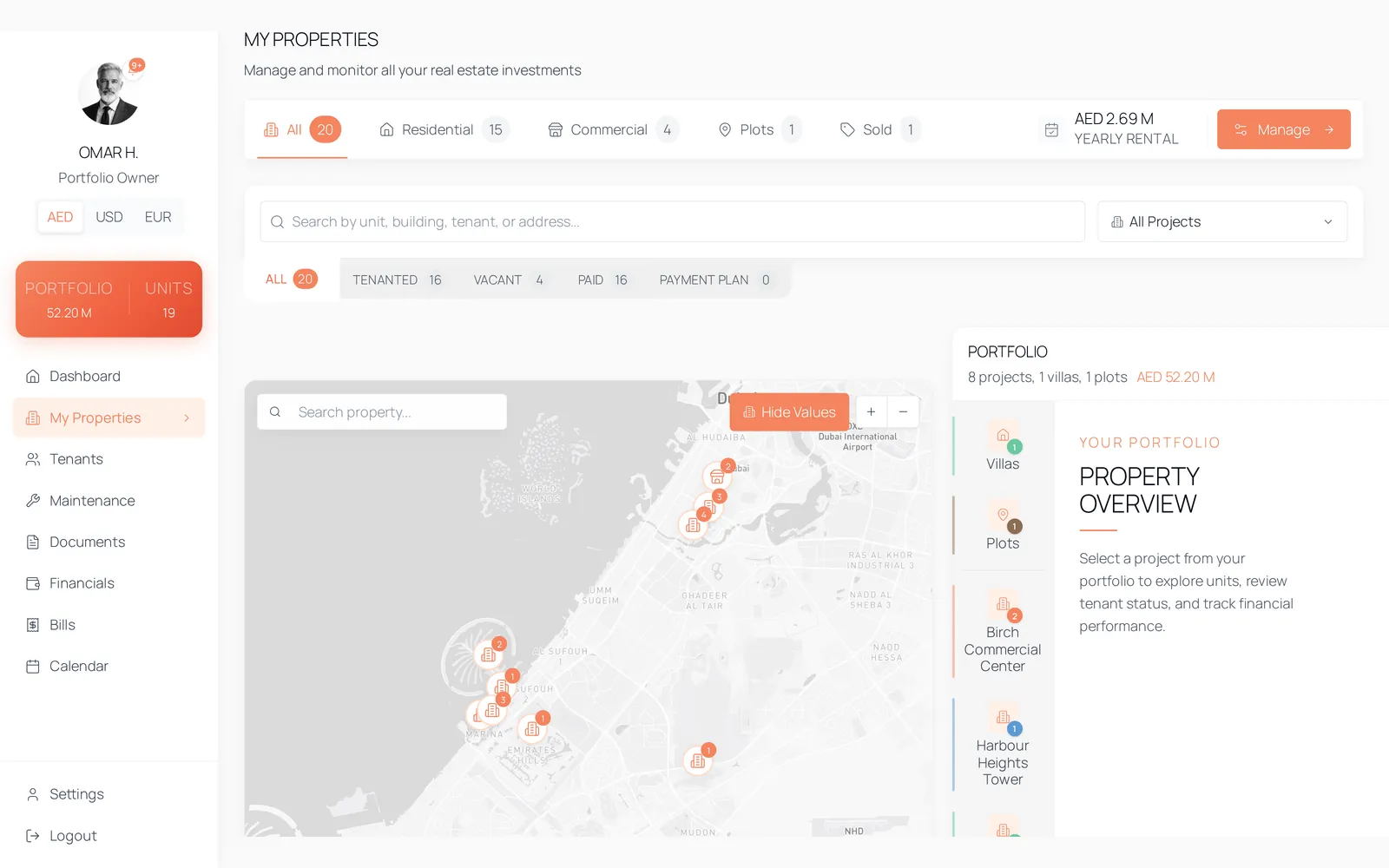
A sale is recorded with its price, its fees and its agents, and set against what the unit cost to buy and what it earned in rent while you held it. The result is a profit and loss for the whole holding, not a number for the closing day.
The sum nobody does properly
- The gain is calculated as sale price minus purchase price, and the four years of fees in between are left out.
- The rent the unit earned while you held it never enters the figure at all.
- Two agents were involved and only one of them is in the spreadsheet.
- The unit is sold and it is still counted in the portfolio value on the dashboard.
How it works
The purchase side is already on the record
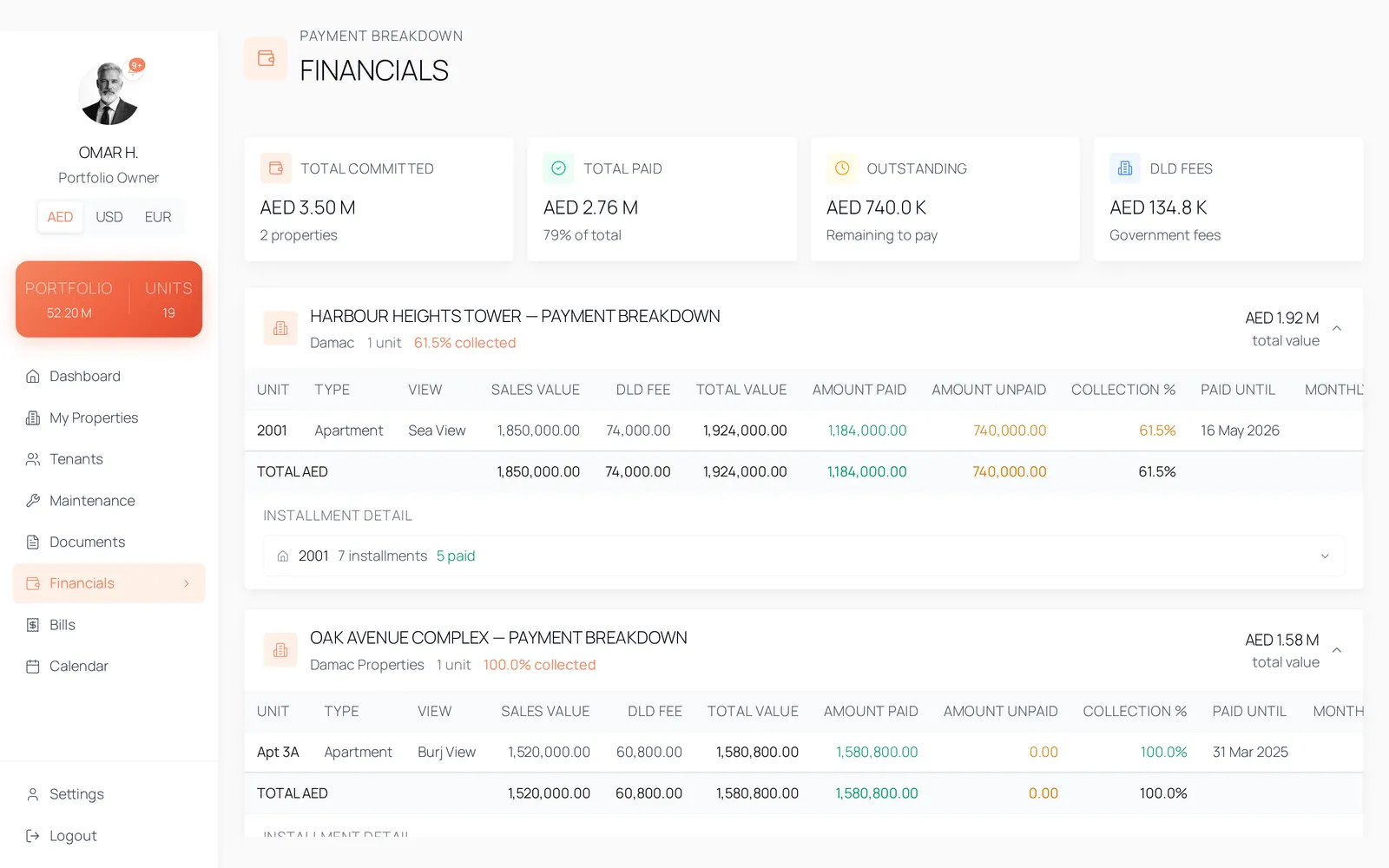
A unit carries its purchase price, its VAT percentage, its DLD percentage, the agent fee percentage, trustee fees and any discount from the day it was added. Those are not re-entered at sale time — they are read from the property, which is what makes the final figure a holding-period result rather than a closing-day one.
The sale side is entered once
Sale price, date and buyer, then the costs of selling: the DLD transfer fee as the amount you actually paid, the agent commission as a percentage or an amount, trustee and lawyer fees, and any other fee with a description. Intermediary agents are recorded individually, each with their own name and fee, because more than one is ordinary here.
Rent earned is added, not assumed
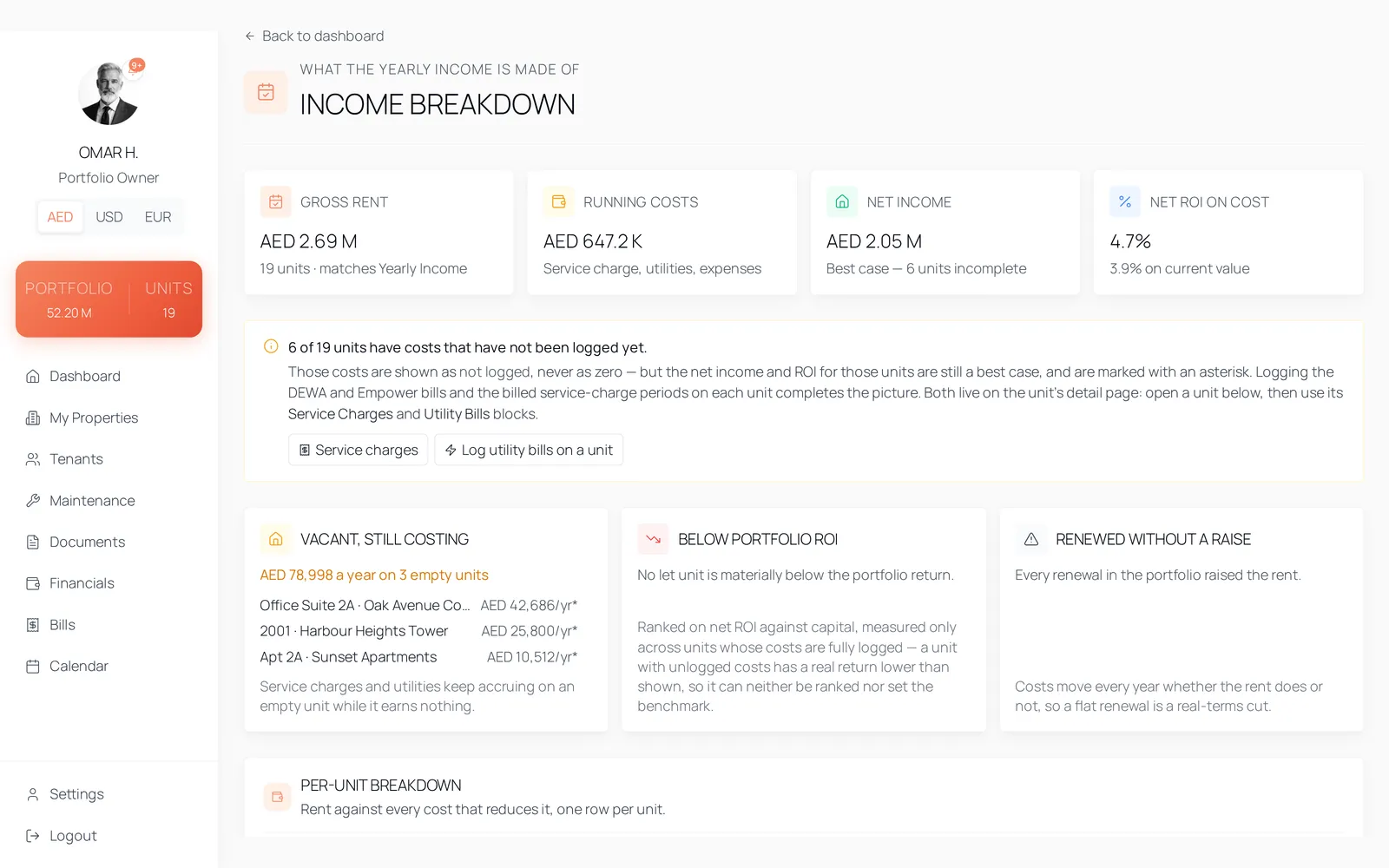
Every contract the unit has carried contributes the rent for the days it actually ran, pro-rated from the lease dates rather than counted as a full year. Maintenance actually spent on the unit is itemised alongside it in the breakdown.
The unit becomes history
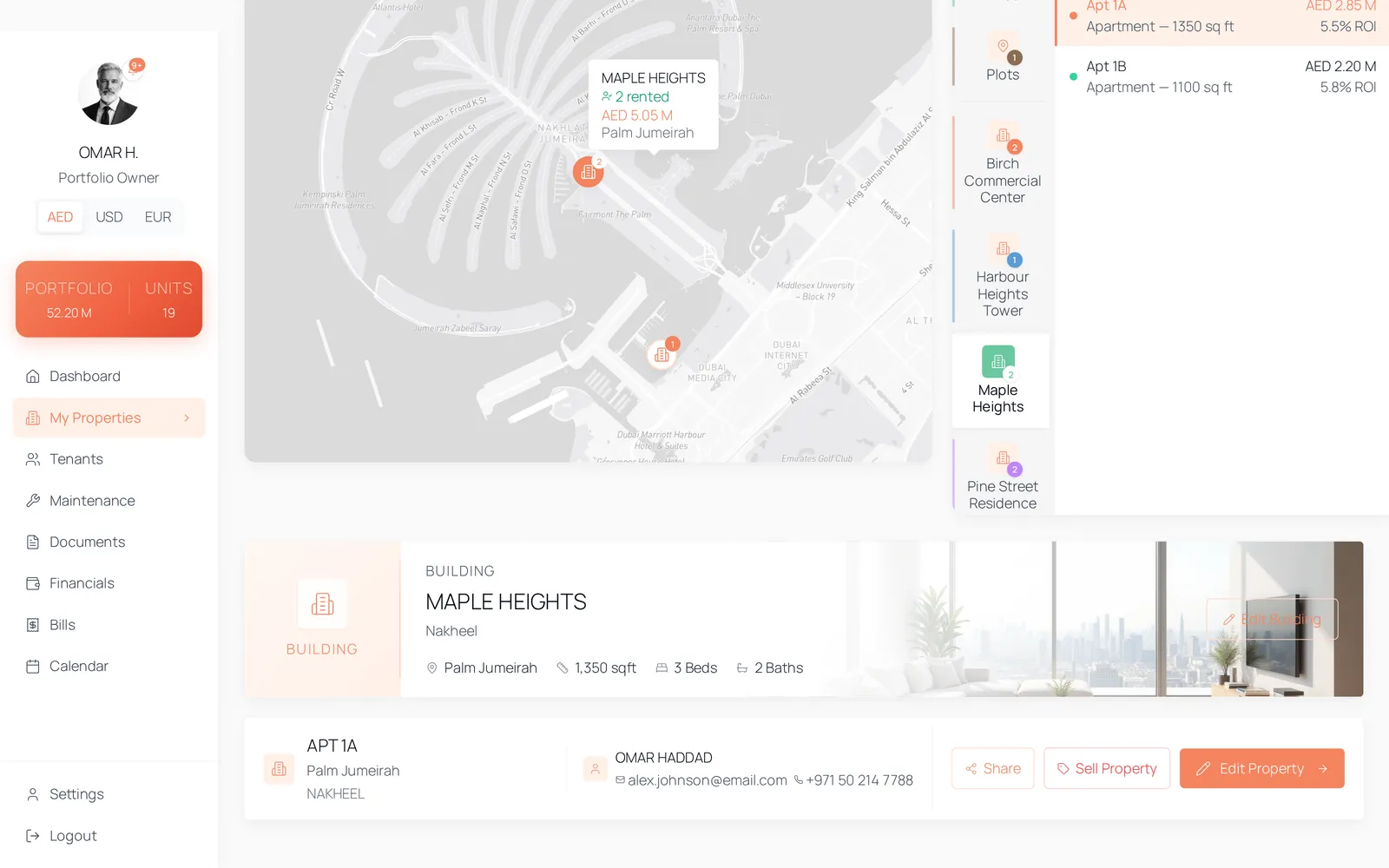
On completion the unit is marked sold. Its detail page carries a sold banner with the date and price, the share and sell actions are withdrawn, and the primary action becomes editing the sale report. If it was the last unsold unit in its project, the project says so.
The details
- Sale record
- Price, date, buyer, agent, agent fee as a percentage and an amount, trustee fee, lawyer fee, DLD transfer fee, other fees with a description, intermediary agents, rental income, total costs and net profit.
- DLD on the sale
- An amount you enter, not a percentage the product assumes. What you actually paid is what is recorded.
- DLD on the purchase
- A percentage held on the property and defaulted to four when a unit is added. It is a default, not a fixed rate — change it per unit.
- Rental income
- Each contract contributes annual rent pro-rated across the days the lease actually ran.
- The sum
- Net result is sale price plus rental income, less purchase costs and less the costs of selling.
- Intermediary agents
- Recorded individually with a name and a fee each, and each one enters the cost of selling.
- After the sale
- The unit is marked sold, the sale banner carries the date and price, and the sale report stays editable.
Questions
On the sale, no — you enter the amount you paid. On the purchase side a percentage is held on the property and defaulted to four when the unit is added, and it can be changed per unit.
See it with data in it
The demo opens instantly, in the role this workflow belongs to, on sample data. There is no account to create and no form in front of it.